Quick answer
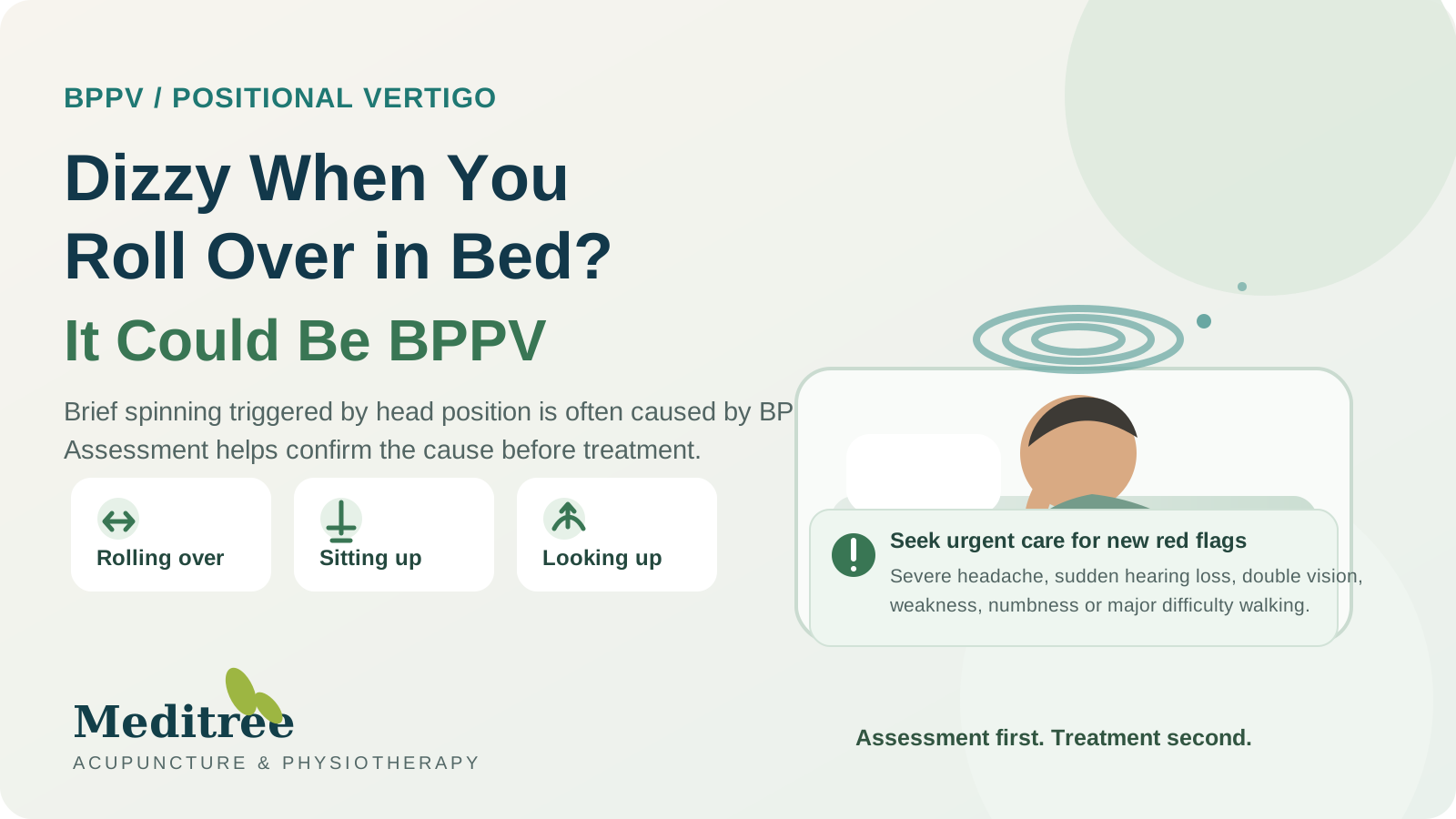
If you experience a brief spinning sensation when rolling over in bed, lying down, sitting up, looking upward or bending forward, BPPV is one possible cause. BPPV is an inner-ear condition in which tiny calcium crystals move into a semicircular canal and disturb normal balance signals. Because not every episode of dizziness is BPPV, assessment should come before treatment.
You roll over in bed and suddenly the room starts spinning. You sit up in the morning and everything seems to move for a few seconds. You look upward or bend forward and the same intense sensation returns.
If that pattern sounds familiar, one possible cause is benign paroxysmal positional vertigo (BPPV), one of the most common causes of vertigo.
BPPV can feel alarming, but its characteristic episodes are usually brief and triggered by particular head positions. Once the cause has been properly identified, specific repositioning manoeuvres can often help.
What causes dizziness when you roll over in bed?
Your inner ear contains a balance system that helps your brain understand the position and movement of your head. Inside this system are tiny calcium carbonate particles called otoconia, often described as ear crystals.
In BPPV, some of these particles become displaced and enter one of the semicircular canals. When your head changes position, the loose particles move and create an abnormal balance signal. The mismatch between signals from the inner ear, eyes and brain can create the sudden sensation that you or the room is spinning.
Health New Zealand lists lying down, rolling over or sitting up in bed, and tipping the head up or down among the classic BPPV triggers.
What does BPPV usually feel like?
BPPV usually causes positional vertigo rather than constant dizziness. Because symptoms can come on suddenly, it can also increase the risk of falling.
- Spinning when rolling onto one side in bed
- Vertigo when lying back or sitting up
- Dizziness when looking upward
- Symptoms when bending forward
- A strong but brief spinning sensation, usually lasting less than a minute once the head is still
- Possible nausea or lingering unsteadiness after the spinning settles
Is dizziness in bed always BPPV?
No. Dizziness and vertigo can have several different causes, including vestibular migraine, Ménière’s disease, inner-ear inflammation, medication effects, blood-pressure changes and neurological conditions.
Tinnitus, hearing changes, severe headache, visual symptoms, persistent imbalance or symptoms that do not follow a typical positional pattern can be important clues that another cause needs to be considered.
For a broader overview, see Vertigo, Dizziness and Tinnitus Support.
Which side is affected by BPPV?
Some people notice stronger spinning when they roll towards one side, but symptoms alone do not always identify the affected ear or semicircular canal reliably.
A clinician can compare positional tests on both sides and observe the direction of nystagmus. This helps guide the choice and direction of a repositioning manoeuvre rather than relying only on which side feels worse.
How is BPPV assessed?
Assessment starts with the symptom pattern: what the dizziness feels like, which movements trigger it, whether one side is worse, how long each episode lasts and whether hearing, tinnitus, headache or neurological symptoms are present.
When BPPV is suspected, a positional test such as the Dix-Hallpike test may be used. The clinician moves the head and body into a specific position while observing symptoms and characteristic eye movements called nystagmus.
The aim is to identify whether the presentation is consistent with BPPV and, when possible, which side and semicircular canal are involved.
How is BPPV treated?
When an appropriate type of BPPV is confirmed, treatment often involves a canalith repositioning manoeuvre. One of the best-known approaches is the Epley manoeuvre.
The head is moved through a planned sequence of positions to guide the displaced particles away from the affected semicircular canal to an area where they no longer produce the same abnormal balance signal.
Health New Zealand reports that one correctly performed Epley manoeuvre has been shown to resolve positional vertigo in about 75% to 80% of people with BPPV. Some people need the manoeuvre repeated or require a different manoeuvre depending on the canal involved.
Learn more about BPPV and positional vertigo assessment in East Auckland.
Should I try the Epley manoeuvre at home?
Online videos can make the Epley manoeuvre look simple, but the important first step is knowing whether the symptoms are actually BPPV and which side and canal appear to be involved.
Healthify notes that a healthcare provider or physiotherapist can determine whether the manoeuvre is suitable and can teach home treatment when appropriate. Some manoeuvres may also be unsuitable for people with certain neck or back problems.
If this is a new episode of unexplained dizziness, assessment is a safer starting point than repeatedly performing a manoeuvre without a diagnosis.
What if the Epley manoeuvre does not work?
One unsuccessful attempt does not automatically rule out BPPV. The manoeuvre may need to be repeated, the other ear may be involved, a different semicircular canal may be affected, or some residual imbalance may remain after the positional spinning improves.
Persistent or atypical symptoms should be reassessed rather than treating every recurrence as the same problem.
Can BPPV come back?
Yes. BPPV can settle successfully and recur months or years later. A recurrence does not necessarily mean that the original treatment failed; the inner-ear particles can become displaced again.
If the same brief positional spinning returns, reassessment can help confirm whether BPPV has recurred or whether another cause should be considered.
What about balance rehabilitation?
Some people remain cautious or mildly unsteady after the strongest spinning has resolved. Depending on the assessment, rehabilitation may include balance work, walking confidence, head-and-eye movement tolerance, mobility and a gradual return to normal activities.
The goal is not only to settle one episode of vertigo, but also to help you move safely and confidently again.
When is dizziness or vertigo an emergency?
Not all vertigo is BPPV. Health New Zealand advises calling 111 when vertigo occurs with concerning symptoms such as trouble speaking or swallowing, arm or leg weakness or numbness, major difficulty walking or repeated falls, double vision or loss of vision, sudden hearing loss on one side, severe headache or neck pain, severe vomiting or feeling very unwell, or a high temperature with feeling hot and shivery.
These symptoms should not be assumed to be caused by ear crystals.
If positional dizziness is interfering with sleep, work, driving, exercise or everyday confidence, consider having the symptoms properly assessed.
Where can I get a BPPV assessment in East Auckland?
If brief spinning is repeatedly triggered when you roll over in bed, lie down, sit up, look upward or change head position, the pattern may be consistent with BPPV.
At Meditree Acupuncture & Physiotherapy in East Auckland, the starting point is assessment of the symptom pattern, movement and balance rather than assuming every episode of dizziness has the same cause. Depending on the findings, care may include an appropriate repositioning manoeuvre, balance rehabilitation, education and guidance about when GP, audiology or specialist assessment is more appropriate.
Visit BPPV and Positional Vertigo, learn whether the Epley manoeuvre is safe to try at home, or read what to do when BPPV returns.
Experiencing dizziness when you turn in bed?
Brief positional vertigo is often treatable, but the first step is identifying the cause. Meditree provides physiotherapy assessment and conservative care for appropriate vertigo and balance presentations in East Auckland.
Assessment first. Treatment second.
Frequently Asked Questions
Why do I get dizzy when I turn over in bed?
BPPV is one possible cause. A change in head position can move displaced inner-ear particles and briefly trigger vertigo. Other conditions can also cause positional dizziness, so the pattern should be assessed rather than assumed to be BPPV.
How can I tell which ear is causing BPPV?
The side that triggers stronger symptoms may offer a clue, but it is not a reliable diagnosis by itself. Positional testing and observation of characteristic eye movements can help identify the affected ear and canal.
How long does BPPV dizziness last?
A typical positional episode usually lasts less than a minute after the head stops moving, although nausea or mild unsteadiness may last longer.
Can BPPV cause tinnitus?
Typical BPPV primarily causes positional vertigo. Dizziness together with tinnitus or hearing changes is important to mention because other inner-ear conditions may need to be considered.
Can BPPV get better on its own?
Yes. BPPV often improves spontaneously over weeks or months, but repositioning manoeuvres can help symptoms resolve sooner when the diagnosis and affected canal are appropriate.
Can BPPV come back after treatment?
Yes. BPPV can recur months or years later. Reassessment helps confirm whether a new episode is BPPV again or has another cause.
Health Information Notice
This article provides general health information and does not replace individual medical diagnosis or treatment. Dizziness and vertigo can have many causes. Seek appropriate medical assessment for new, persistent, unusual or worsening symptoms, and urgent help for neurological symptoms, sudden hearing loss or other red flags.
Written by: Meditree Clinical Team
Meditree Acupuncture & Physiotherapy
East Auckland
Related treatments
Learn more about the services discussed in this article.
Book a consultation
If you would like personalised advice, our team can help you decide whether acupuncture, physiotherapy, herbal medicine or ACC-supported care may be suitable.
Related articles
Continue reading with related health articles from Meditree.
Why Does BPPV Keep Coming Back? What to Do When Vertigo Returns
Why does BPPV come back? Learn what may be associated with recurrent positional vertigo, when another manoeuvre may help, and when new dizziness needs medical assessment.
Read moreEpley Manoeuvre for BPPV: Is It Safe to Try at Home?
Can you safely perform the Epley manoeuvre at home? Learn when it may help BPPV, why the correct side matters, and when dizziness needs medical assessment first.
Read moreTreatment or Exercise: Which Should Come First?
Should treatment or exercise come first? Learn how pain management, acupuncture, physiotherapy and progressive rehabilitation can support different stages of recovery.
Read moreLower Back Pain Treatment in East Auckland
Lower back pain treatment in East Auckland with physiotherapy, acupuncture and ACC support. Learn about symptoms, warning signs and recovery options.
Read more