Quick answer
BPPV can return even after a successful repositioning manoeuvre because inner-ear particles may become displaced again. A recurrence often causes the same brief spinning with rolling over, lying down, sitting up or looking upward, but similar symptoms can also come from another condition. If vertigo returns, avoid assuming that the same ear and canal are involved. Reassessment can confirm the pattern, identify the side and determine whether another repositioning manoeuvre is appropriate.
A successful Epley or other repositioning manoeuvre can settle positional vertigo, sometimes quickly. It can therefore be discouraging when the spinning returns weeks, months or years later.
Recurrence does not necessarily mean that the earlier treatment failed. BPPV can happen again when inner-ear particles become displaced another time. However, a familiar sensation is not proof that the same ear, canal or even the same condition is responsible.
The safest response is to compare the new episode with the previous one, check for warning signs and arrange reassessment when the pattern is uncertain, different or persistent.
Can BPPV really come back?
Yes. Clinical guidance advises that people treated for BPPV should be educated about the possibility of recurrence and the importance of follow-up. The balance system can be treated successfully and still develop another episode later.
BPPV occurs when small calcium carbonate particles move into a semicircular canal where they disturb the normal balance signal during head movement. A later episode may involve the same ear, the opposite ear or a different canal.
Because the involved side and canal can change, repeating an old manoeuvre from memory is not always the correct treatment for a new episode.
Why might positional vertigo recur?
For many people, there is no single clear reason. Recurrence becomes more common with age, and BPPV may also occur after a head injury or alongside another inner-ear condition. Research has reported associations with migraine and aspects of bone and vitamin-D health, but an association does not prove that one factor caused an individual episode.
Normal daily movement is not usually a sign that you have done something wrong. Long-term avoidance of head movement is generally not the goal after successful treatment unless a clinician has given a specific temporary restriction for another reason.
If episodes keep returning, review the broader history with a GP or appropriate clinician rather than relying only on repeated manoeuvres. This may include medication, hearing symptoms, migraine features, falls, previous head injury and general health.
Does the returning dizziness sound like BPPV?
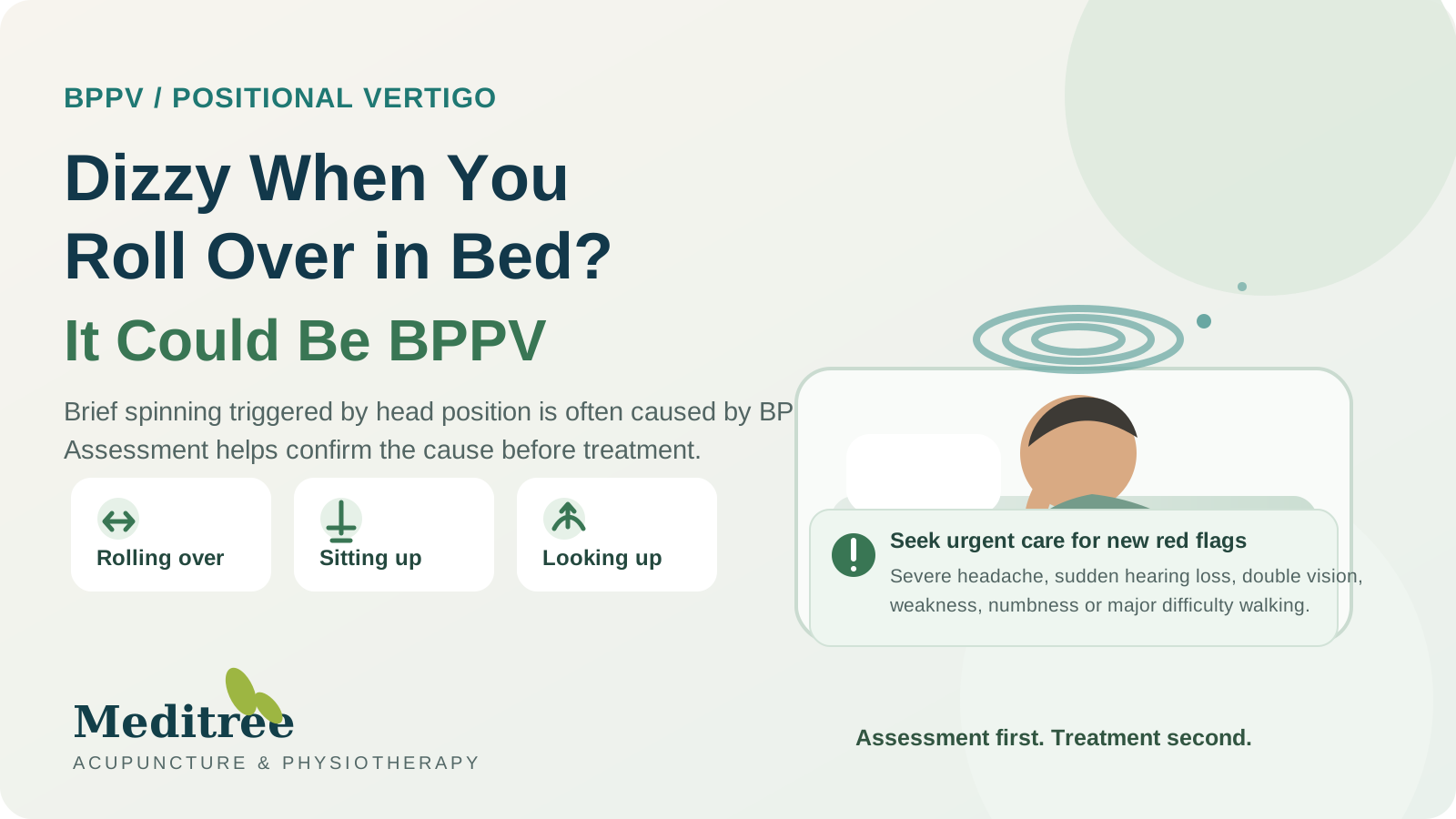
Typical BPPV produces brief bursts of spinning triggered by a change in head position. Common triggers include rolling over in bed, lying back, getting out of bed, looking upward or bending down. The strongest spinning usually lasts seconds rather than remaining continuously severe for hours.
After the brief spinning stops, some people notice nausea, motion sensitivity or a less specific sense of imbalance. Persistent symptoms still deserve reassessment, especially if they are worsening or interfering with walking and daily activity.
- Brief spinning linked clearly to head position can fit BPPV
- Constant severe vertigo is not the usual pattern of uncomplicated BPPV
- New hearing loss, tinnitus or ear pressure may suggest another ear condition
- Neurological symptoms or severe difficulty walking require urgent assessment
A previous BPPV diagnosis does not automatically confirm that every future episode is BPPV or that the same manoeuvre and direction are still correct.
What should I do when BPPV symptoms return?
First, make the environment safe. Sit or lie down, use support when walking and avoid driving, ladders or other activities where a sudden spin could cause injury.
Next, note which movements trigger the symptoms, approximately how long the spinning lasts and whether there are hearing, headache, neurological or fainting symptoms. These details help distinguish positional vertigo from other causes.
If a clinician previously confirmed BPPV and taught you a specific home manoeuvre with a recurrence plan, follow that personalised advice. If the side is uncertain, the symptoms feel different or the manoeuvre repeatedly fails, arrange reassessment instead of continuing indefinitely.
When should I be reassessed?
Reassessment is particularly useful when this is the first recurrence, the affected side is unclear, symptoms have changed, vertigo is lasting longer than expected, or repeated home treatment is not helping.
A clinician may repeat positional testing and observe nystagmus to identify whether BPPV is active and which canal and side appear to be involved. If the findings do not fit BPPV, further medical, hearing, vestibular or neurological assessment may be more appropriate.
Guidelines also recommend reassessment when symptoms persist after initial treatment so that unresolved BPPV and other causes of dizziness can be considered.
Do not assume that a new or unusual episode is recurrent BPPV when neurological, hearing or other emergency warning signs are present.
Warning signs that need urgent medical help
Seek urgent medical help if vertigo is accompanied by new facial droop, trouble speaking or swallowing, weakness or numbness, double vision or loss of vision, collapse, a sudden severe headache, new severe neck pain, severe inability to walk, or sudden hearing loss.
Persistent severe vomiting, fainting, chest pain, a major head injury or feeling acutely unwell also require appropriate urgent assessment. In a New Zealand emergency, call 111.
Can recurrent BPPV be prevented?
There is no guaranteed way to prevent every recurrence. The practical priorities are accurate treatment of each active episode, reducing fall risk, returning gradually to normal safe movement and reviewing relevant health factors when recurrences are frequent.
Routine self-treatment on a schedule when no positional vertigo is present is not a substitute for assessment. Discuss frequent recurrence with your GP or clinician, including whether other health issues or a specialist review should be considered.
Balance or vestibular rehabilitation may help when residual unsteadiness, motion sensitivity or reduced confidence continues after the positional spinning has settled.
Treat the episode you have now, not only the one you had last time.
Recurrent BPPV assessment in East Auckland
At Meditree Acupuncture & Physiotherapy, assessment considers the trigger, duration and quality of the dizziness together with hearing, neurological symptoms, mobility and balance. When appropriate, positional testing can help identify whether the presentation is consistent with active BPPV.
Treatment is matched to the suspected canal and side rather than applying one manoeuvre to every episode. If the presentation is atypical, we explain when GP, audiology or specialist assessment should come first.
For home-treatment safety, read Epley Manoeuvre for BPPV: Is It Safe to Try at Home?. For the broader symptom pattern, read Dizzy When You Roll Over in Bed? It Could Be BPPV.
Has the spinning returned?
A familiar positional spin may be recurrent BPPV, but the current side, canal and warning signs still need to be considered.
Meditree provides assessment and conservative management for appropriate positional vertigo and balance presentations in East Auckland.
Check the pattern again. Treat the correct side and canal. Escalate unusual symptoms.
Frequently Asked Questions
Does recurrent BPPV mean the Epley manoeuvre failed?
Not necessarily. A manoeuvre may have treated the original episode successfully, while inner-ear particles become displaced again later. A new episode may involve a different side or canal and should be matched to current findings.
Can I repeat the same Epley manoeuvre every time vertigo returns?
Only follow a previously taught recurrence plan when the symptoms fit and the side is known. If the pattern is different, the side is uncertain or treatment is not working, seek reassessment.
Is recurrent dizziness always BPPV?
No. Vestibular migraine, inner-ear disorders, medication effects, blood-pressure problems and neurological conditions can also cause recurrent dizziness. The trigger, duration and accompanying symptoms matter.
Why do I still feel unsteady after positional spinning improves?
Residual imbalance or motion sensitivity can remain for a time. Persistent, worsening or function-limiting unsteadiness should be reassessed, and vestibular rehabilitation may be considered when appropriate.
Who should assess recurring BPPV?
An appropriately trained clinician can assess positional vertigo. GP, audiology, vestibular physiotherapy or specialist input may be needed depending on the symptoms and examination findings.
Health Information Notice
This article provides general health information and does not diagnose recurrent BPPV or provide personalised instructions for a repositioning manoeuvre. Seek professional assessment for a first, uncertain, persistent, unusual or worsening episode, and urgent medical help for neurological symptoms, sudden hearing loss or other warning signs.
Written by: Meditree Clinical Team
Meditree Acupuncture & Physiotherapy
East Auckland
Related treatments
Learn more about the services discussed in this article.
Related conditions
Explore condition-specific information that may relate to this article.
Book a consultation
If you would like personalised advice, our team can help you decide whether acupuncture, physiotherapy, herbal medicine or ACC-supported care may be suitable.
Related articles
Continue reading with related health articles from Meditree.
이석증은 왜 자꾸 재발할까요? 다시 어지러울 때 대처법
이석증은 왜 재발할까요? 다시 생긴 체위성 어지럼증의 대처법과 재평가가 필요한 경우, 긴급 진료가 필요한 위험 신호를 알아봅니다.
더 읽기Epley Manoeuvre for BPPV: Is It Safe to Try at Home?
Can you safely perform the Epley manoeuvre at home? Learn when it may help BPPV, why the correct side matters, and when dizziness needs medical assessment first.
Read moreDizzy When You Roll Over in Bed? It Could Be BPPV
Brief spinning when you roll over in bed, lie down or sit up may be BPPV. Learn the symptoms, tests, Epley treatment and when to seek assessment in East Auckland.
Read moreAnkle Sprain Treatment in East Auckland: Recovery, Physiotherapy and ACC
Ankle sprain treatment in East Auckland. Learn when to seek assessment, what rehabilitation involves, and how physiotherapy and ACC may help.
Read more