Quick answer
The Epley manoeuvre may be suitable for some people with posterior-canal BPPV, but it is not a general exercise for every type of dizziness. The correct side and canal matter, and the movement can briefly provoke strong vertigo. Assessment is especially important for a first or uncertain episode, atypical symptoms, significant neck or back limitations, or any neurological or hearing warning signs. A clinician can determine whether a home manoeuvre is appropriate and teach the correct version.
Search for dizziness when rolling over in bed and you will quickly find videos demonstrating the Epley manoeuvre. The sequence can look simple: turn the head, lie back, rotate and sit up.
What a short video may not show is the decision that comes first. Is the dizziness actually benign paroxysmal positional vertigo (BPPV)? Which ear and semicircular canal appear to be involved? Is the Epley manoeuvre the correct treatment for that pattern, and can the person move through the positions safely?
For an appropriate type of BPPV, a canalith repositioning manoeuvre can be very useful. For dizziness from another cause, repeatedly trying the same movement may delay the assessment that is actually needed.
What is the Epley manoeuvre?
BPPV occurs when tiny calcium carbonate particles from the inner-ear balance system become displaced into a semicircular canal. When the head moves, those particles can create an abnormal balance signal and trigger brief spinning vertigo.
The Epley manoeuvre is a planned sequence of head and body positions intended to guide displaced particles out of the affected posterior semicircular canal. It is one type of canalith repositioning procedure; other canals or BPPV patterns may require a different manoeuvre.
The manoeuvre commonly provokes temporary spinning or nausea while the head is moved. That response is one reason it is helpful to know what to expect and to have a safe environment before attempting it.
Why does the correct side matter?
The right-ear and left-ear versions of the Epley manoeuvre are not interchangeable. Starting on the wrong side may fail to address the affected canal, and a different canal pattern may not respond to Epley at all.
A clinician may use a positional test such as the Dix-Hallpike test while observing the direction and timing of characteristic eye movements called nystagmus. The history, symptom pattern and examination help determine whether the presentation fits posterior-canal BPPV and which side is more likely to be involved.
This is why choosing a side only because one direction feels more uncomfortable is not always reliable.
When might a home Epley manoeuvre be reasonable?
Healthify New Zealand explains that a healthcare provider can perform the Epley manoeuvre and then teach a person how to do it at home when appropriate. Home treatment is more reasonable when BPPV has been assessed, the affected side and suitable manoeuvre are known, and the person has been shown how to perform it safely.
- The symptoms have been assessed and are consistent with BPPV
- The affected side and recommended manoeuvre are known
- A clinician has demonstrated the sequence and explained what symptoms to expect
- Neck, back, mobility and general health allow the positions to be performed safely
- Another person can assist if balance, nausea or confidence is a concern
- There is a clear plan for what to do if symptoms persist, change or worsen
When should assessment come before a YouTube exercise?
A first episode of unexplained vertigo deserves assessment rather than an automatic assumption that loose ear crystals are the cause. The same applies when the dizziness is constant, lasts much longer than a typical positional episode, is not clearly triggered by head position, or comes with symptoms that do not fit a usual BPPV pattern.
Assessment should also come first if the positions cannot be performed comfortably or safely because of neck or back pain, restricted movement, recent injury or surgery, severe mobility limitations, or a high risk of falling.
If you have been diagnosed previously but the current episode feels different, it should be treated as a new presentation rather than repeating an old routine indefinitely.
Do not use an Epley video to test a possible emergency. New neurological symptoms or sudden hearing loss need urgent medical assessment.
Symptoms that need urgent medical attention
Not every spinning sensation is BPPV. Seek urgent medical help when vertigo occurs with new trouble speaking or swallowing, facial droop, arm or leg weakness or numbness, severe difficulty walking, collapse, double vision or loss of vision, a sudden severe headache, new severe neck pain, or sudden hearing loss in one ear.
Severe persistent vomiting, a major head injury, chest pain, fainting or feeling acutely unwell also require appropriate urgent assessment. In a New Zealand emergency, call 111.
What if the manoeuvre causes strong dizziness?
Temporary vertigo and nausea can occur during a repositioning manoeuvre because the head positions move the particles and stimulate the balance system. The sensation should be managed in a safe position where falling is not possible.
Stop and seek advice if the experience does not resemble the usual brief positional symptoms, if severe pain occurs, or if new neurological, hearing or other concerning symptoms appear.
Avoid driving or activities that require reliable balance until you know how you respond and feel steady enough to do them safely.
What if Epley does not work?
One unsuccessful attempt does not prove that the condition is not BPPV. The side may be incorrect, the manoeuvre may need to be repeated, another canal may be involved, or residual imbalance may remain after the strongest spinning improves.
It is also possible that the dizziness has another cause. Persistent symptoms should therefore lead to reassessment rather than repeatedly performing the same manoeuvre without a clear diagnosis.
Depending on the findings, management may involve a different repositioning manoeuvre, balance and vestibular rehabilitation, GP or audiology assessment, or referral for specialist review.
The safest home manoeuvre is the one matched to a properly assessed BPPV pattern.
BPPV and Epley assessment in East Auckland
At Meditree Acupuncture & Physiotherapy, assessment begins with the symptom pattern, triggers, duration, hearing and neurological symptoms, movement and balance. When appropriate, positional testing can help determine whether the presentation is consistent with BPPV and which treatment approach may fit.
If a home manoeuvre is suitable, the goal is to make sure you understand the correct side, sequence, expected response and reasons to stop or seek further help. If the findings do not fit BPPV, we explain why medical, hearing or specialist assessment may be a better next step.
For the broader condition overview, read Dizzy When You Roll Over in Bed? It Could Be BPPV. If symptoms have returned after treatment, read Why Does BPPV Keep Coming Back?, and visit BPPV and Positional Vertigo.
Unsure whether the Epley manoeuvre is right for you?
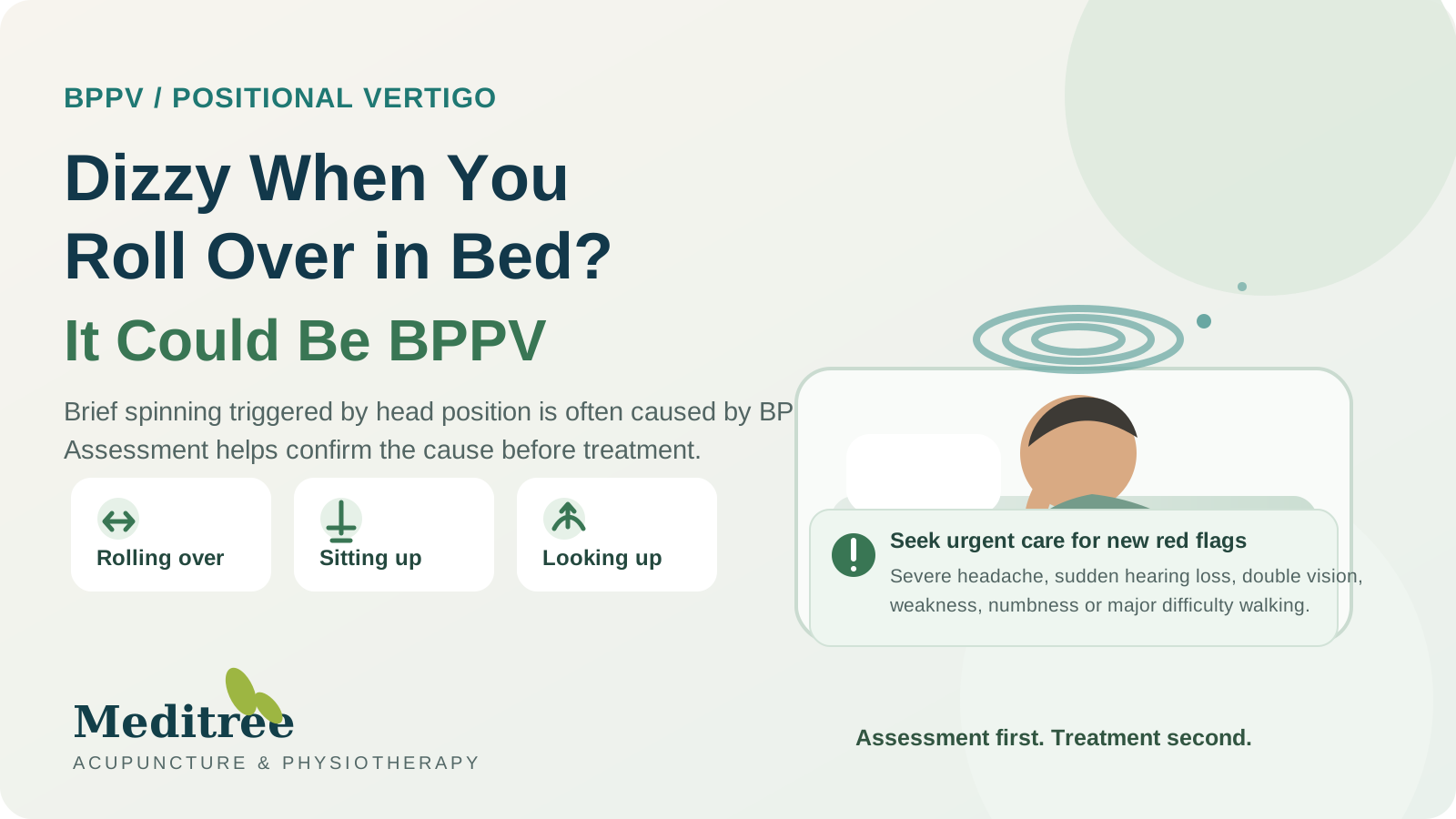
If rolling over, lying down, sitting up or looking upward triggers brief spinning, BPPV is one possible explanation. A focused assessment can help clarify whether a repositioning manoeuvre is appropriate and which version should be used.
Meditree provides physiotherapy assessment and conservative management for appropriate vertigo and balance presentations in East Auckland.
Confirm the pattern. Choose the correct manoeuvre. Know when to seek further help.
Frequently Asked Questions
Can I do the Epley manoeuvre by myself?
Some people can perform it at home after a clinician has confirmed an appropriate BPPV pattern, identified the side and taught the correct sequence. It should not be treated as a universal exercise for unexplained dizziness.
How do I know which ear is affected?
The affected side is best determined from the symptom history and positional testing with observation of nystagmus. The side that simply feels worse is not always a reliable guide.
How many times should I repeat the Epley manoeuvre?
There is no single repetition plan that suits everyone. Follow the plan given after assessment, and seek reassessment if symptoms persist, change or the manoeuvre repeatedly fails.
Why am I still unsteady after the spinning stops?
Mild residual imbalance can remain after the main positional vertigo improves. Persistent or worsening unsteadiness should be reassessed, and some people may benefit from balance or vestibular rehabilitation.
Does Epley treat every type of vertigo?
No. It is designed for an appropriate canal pattern of BPPV. Vestibular migraine, Ménière’s disease, inner-ear inflammation and neurological causes require different assessment and management.
Health Information Notice
This article provides general health information and is not a diagnosis or personalised instruction to perform the Epley manoeuvre. Dizziness and vertigo have many possible causes. Seek professional assessment for a first, uncertain, persistent, unusual or worsening episode, and urgent medical help for neurological symptoms, sudden hearing loss or other warning signs.
Written by: Meditree Clinical Team
Meditree Acupuncture & Physiotherapy
East Auckland
Related treatments
Learn more about the services discussed in this article.
Related conditions
Explore condition-specific information that may relate to this article.
Book a consultation
If you would like personalised advice, our team can help you decide whether acupuncture, physiotherapy, herbal medicine or ACC-supported care may be suitable.
Related articles
Continue reading with related health articles from Meditree.
Why Does BPPV Keep Coming Back? What to Do When Vertigo Returns
Why does BPPV come back? Learn what may be associated with recurrent positional vertigo, when another manoeuvre may help, and when new dizziness needs medical assessment.
Read more이석증 운동, 유튜브를 보고 혼자 해도 될까요?
이석증 운동과 에플리 이석정복술을 집에서 혼자 해도 될까요? 올바른 방향이 중요한 이유와 먼저 평가받아야 하는 어지럼증 위험 신호를 알아봅니다.
더 읽기Dizzy When You Roll Over in Bed? It Could Be BPPV
Brief spinning when you roll over in bed, lie down or sit up may be BPPV. Learn the symptoms, tests, Epley treatment and when to seek assessment in East Auckland.
Read moreRinging in Your Ears? Understanding Tinnitus and the Role of Acupuncture
Looking for tinnitus support in East Auckland? Learn about ringing or buzzing in the ears, medical warning signs, assessment and the realistic role of acupuncture.
Read more