Quick summary
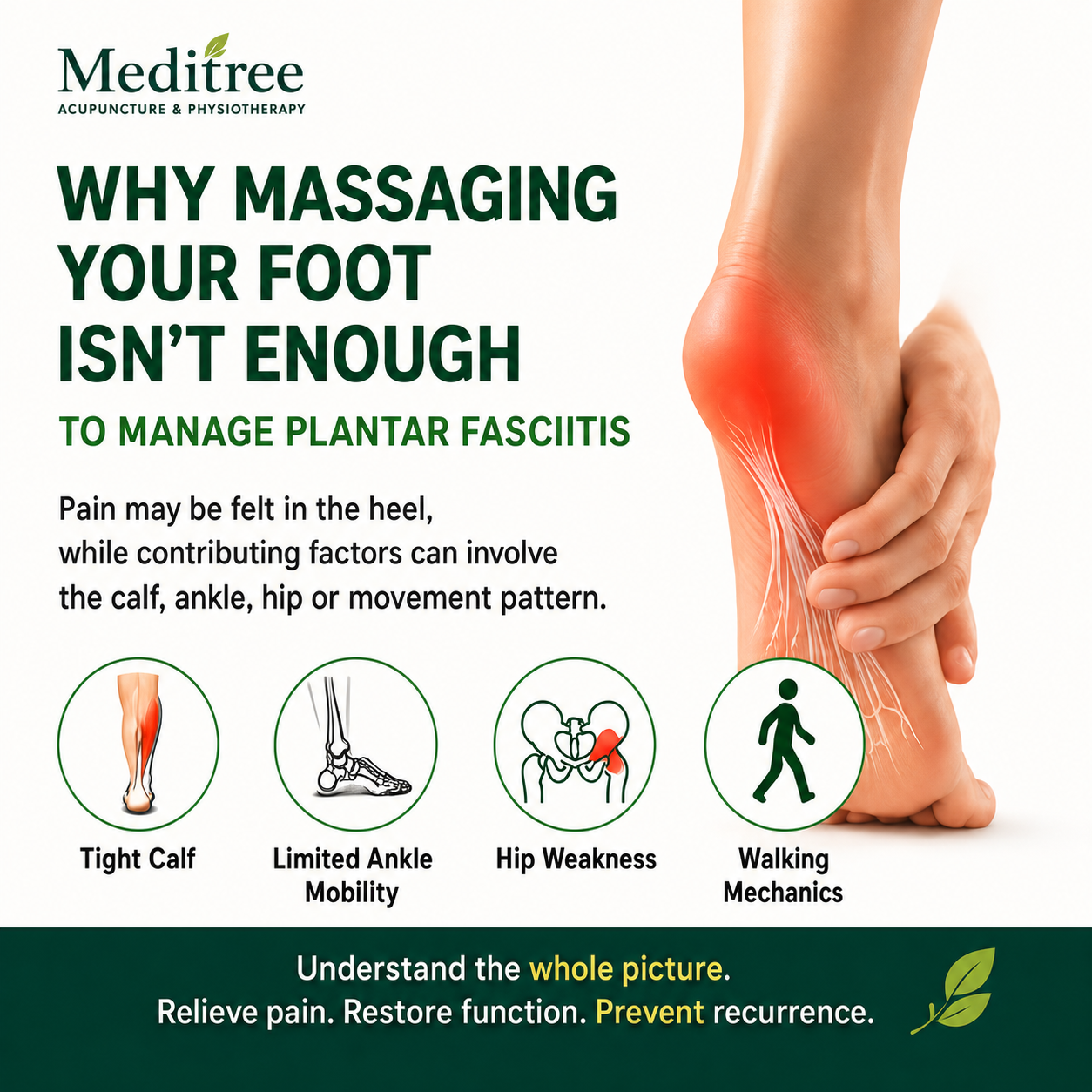
Plantar fasciitis is not always only about the painful part of the foot. Calf mobility, ankle movement, foot capacity, hip strength, activity level and walking mechanics may all influence plantar fascia loading. Massage may provide temporary relief, but recurring heel pain may benefit from whole-chain assessment and progressive rehabilitation.
Do you feel sharp heel pain during your first few steps in the morning?
Does your foot become sore after prolonged standing or walking?
Many people use a massage ball or golf ball underneath the foot to manage plantar fasciitis symptoms. Massage may provide temporary relief. However, when heel pain repeatedly returns, contributing factors may involve more than the painful plantar fascia itself.
Calf mobility, ankle movement, foot capacity, hip strength, activity load and walking mechanics may all influence how load is distributed through the foot.
Quick summary
- Plantar fasciitis is a common cause of plantar heel pain.
- Morning first-step pain is a common symptom.
- Massage may temporarily reduce discomfort.
- Persistent pain may involve more than the painful area itself.
- Calf stiffness and limited ankle mobility may affect foot loading.
- Hip and lower-limb control may influence movement mechanics in some patients.
- Rehabilitation should be based on individual assessment.
- Mobility, progressive strengthening and load management may form part of recovery.
What is plantar fasciitis?
The plantar fascia is a strong band of connective tissue that extends from the heel toward the toes.
It contributes to arch support, force transfer during walking, force absorption and push-off support.
Repeated or excessive loading may irritate the plantar fascia and contribute to plantar heel pain.
Common symptoms may include first-step pain in the morning, pain after prolonged sitting, discomfort after prolonged standing, pain after extended walking, and tenderness around the inside or underside of the heel.
Heel pain can have several possible causes. If symptoms are persistent or unclear, assessment helps identify what may be contributing.
Why can massage help only temporarily?
Massage, rolling or soft-tissue release under the foot may reduce discomfort for some people.
This may happen because massage can temporarily change pain sensitivity and reduce the feeling of tissue tightness.
That does not mean massage is ineffective. It can be useful as part of symptom management.
However, if the same loading or movement factors continue, symptoms may return. Persistent or recurrent plantar heel pain may benefit from assessing the wider movement system.
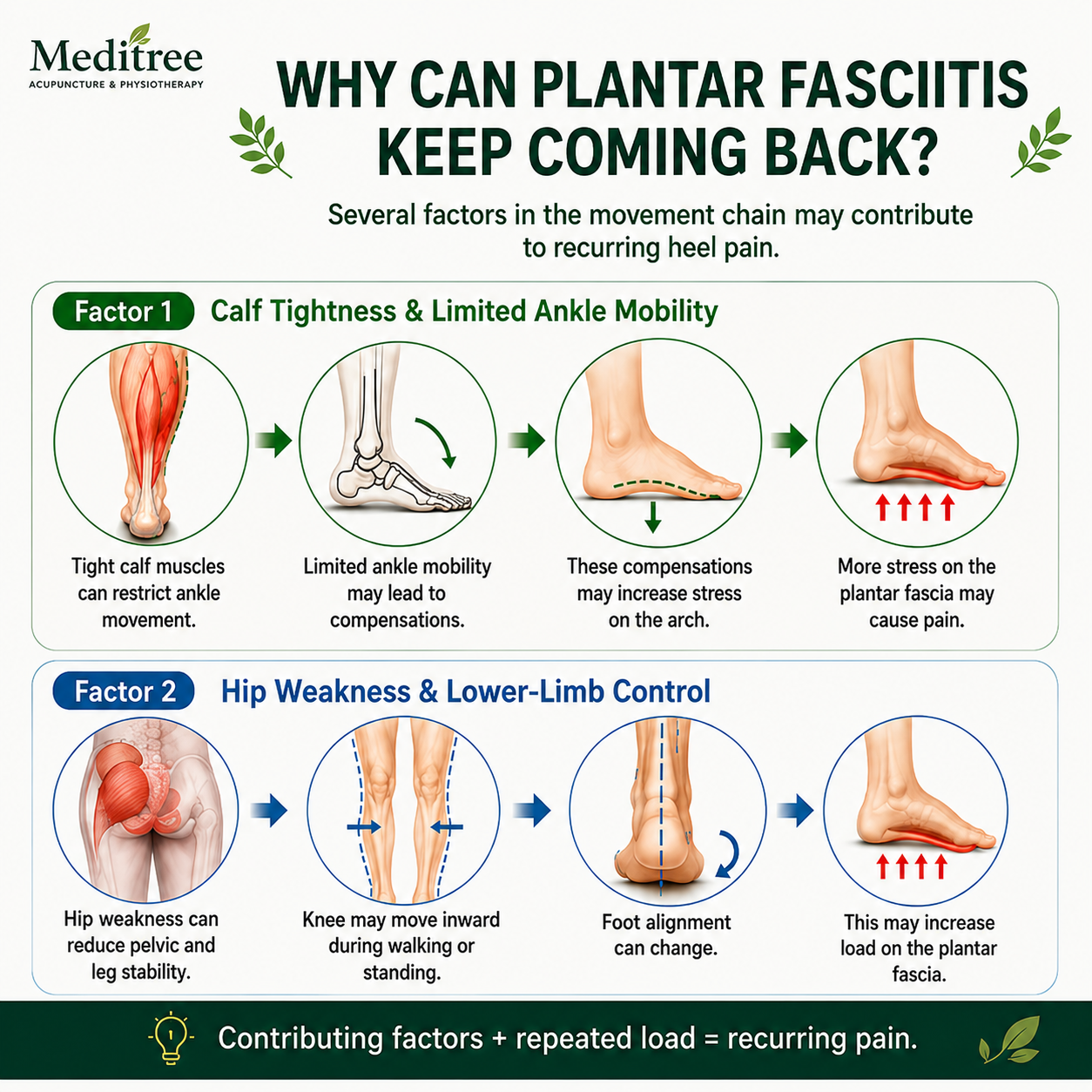
Contributing factor 1: calf tightness and limited ankle mobility
The gastrocnemius, soleus and Achilles tendon all influence ankle dorsiflexion during walking.
When ankle mobility is reduced, some patients may change the way the foot and lower limb move during gait to keep progressing forward.
Limited ankle mobility may contribute to compensatory movement in some patients.
This does not mean every patient will develop the same mechanics, and not everyone with plantar heel pain has the same mobility pattern.
Contributing factor 2: hip strength and lower-limb control
The gluteal muscles help control the pelvis, thigh and knee during walking and weight-bearing tasks.
Reduced hip control may influence pelvic control, knee alignment and lower-limb mechanics, which can affect how load reaches the foot.
Not everyone with plantar fasciitis has weak hip muscles. Hip strength and movement control are simply factors that may be assessed when heel pain is persistent or recurrent.
Movement chain concept: Hip → Knee → Ankle → Foot
Why can heel pain keep returning?
Recurrence often reflects multiple factors acting together rather than one single cause.
Contributing factors may include sudden increases in walking or running volume, prolonged standing, work demands, footwear, calf stiffness, ankle mobility, foot strength and capacity, lower-limb strength, recovery time and walking mechanics.
There is rarely one single cause that explains every case of plantar heel pain.
What about heel spurs?
Heel spurs may be seen on imaging in people with or without heel pain.
The presence of a heel spur does not automatically mean the spur itself is the source of symptoms.
Clinical history, examination findings and imaging should be interpreted together.
The key to long-term recovery
Depending on assessment, management may include plantar fascia-specific stretching, calf mobility, progressive calf strengthening, foot strengthening, hip strengthening when appropriate, gradual load progression, gait assessment, footwear advice, taping and orthotic support when clinically appropriate.
The aim is to improve comfort and function while reducing the likelihood of recurrence.
Exercises that may be used
Exercises should be selected and progressed based on symptoms, movement findings and goals rather than a one-size-fits-all template.
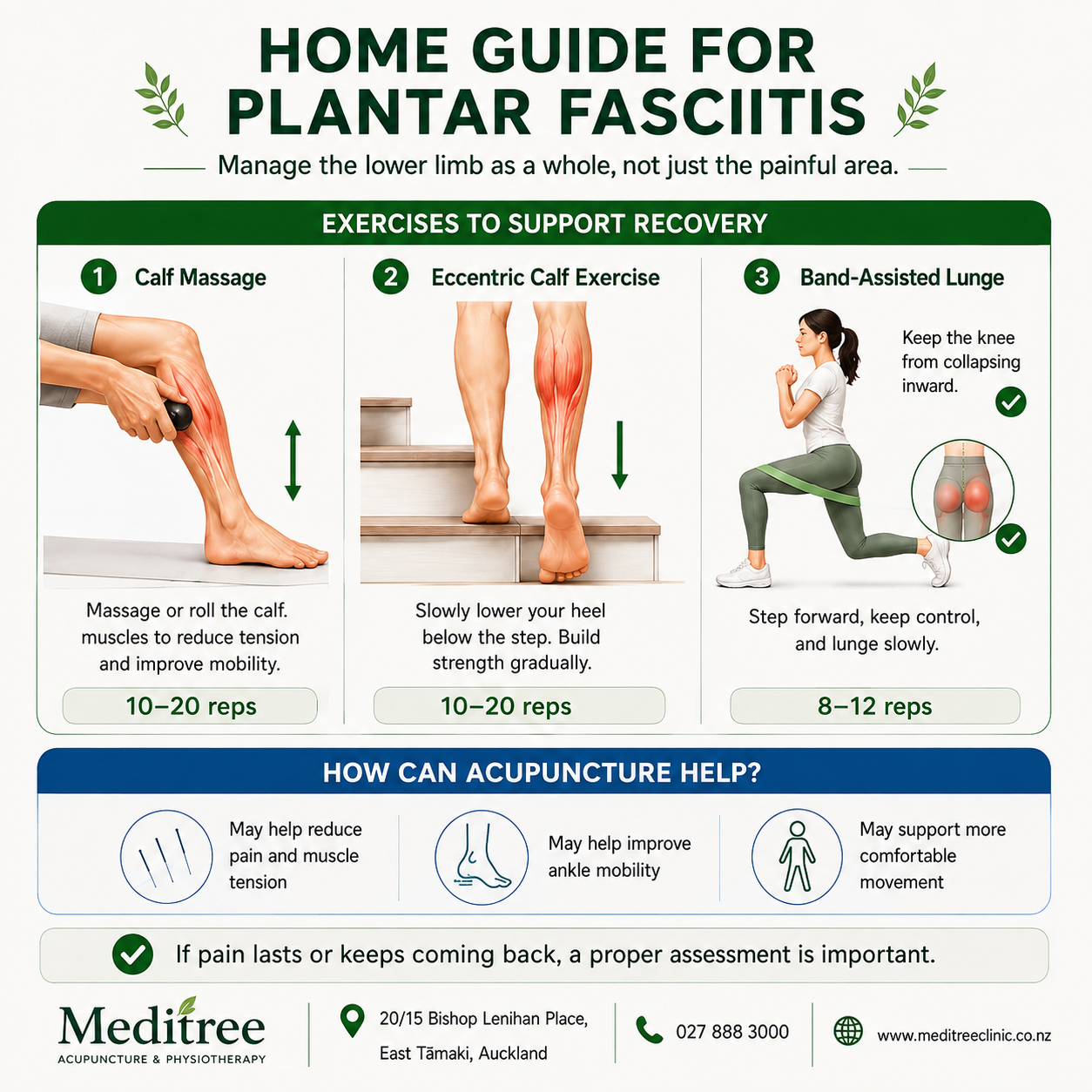
1) Calf mobility
Gentle calf stretching, mobility exercises or soft-tissue work may be useful when calf stiffness or limited ankle movement is identified.
2) Progressive calf strengthening
Controlled heel raises and gradual loading can help improve tissue capacity over time.
The appropriate repetitions, resistance and loading should depend on symptoms, strength and individual assessment.
3) Hip and lower-limb strengthening
When clinically relevant, supported lunges, resistance-band exercises and single-leg control exercises may be used to improve lower-limb control.
Exercises should not be forced through sharp or progressively worsening pain.
Can acupuncture help plantar fasciitis?
Acupuncture may be used as one component of plantar heel pain management, particularly when pain or muscle tension is limiting comfortable movement.
At Meditree, acupuncture may be combined with physiotherapy and rehabilitation according to the individual presentation.
Depending on assessment, a plan may include acupuncture, electroacupuncture, soft-tissue therapy, physiotherapy, mobility work, progressive strengthening and rehabilitation exercises.
Acupuncture is not presented as a replacement for rehabilitation, and outcomes vary between individuals.
How Meditree assesses heel pain
Assessment may include pain location, symptom history, first-step pain, ankle range of motion, calf flexibility, calf strength, foot movement, foot capacity, hip strength, lower-limb control, gait, work demands, sport and exercise load, footwear and recent activity changes.
Treatment is individualised based on these findings.
Don’t just treat where it hurts — understand what may be contributing to the load.
Our approach at Meditree
Meditree Acupuncture & Physiotherapy may combine physiotherapy, acupuncture, movement assessment and progressive rehabilitation to support pain management, comfortable movement, functional recovery and return to daily activity.
When should heel pain be assessed?
Consider assessment when symptoms persist for several weeks, repeatedly return, make walking difficult, affect work or exercise, or progressively worsen.
Assessment is also important when numbness, significant swelling, weakness or post-traumatic pain is present.
Sudden severe symptoms or neurological symptoms may require medical evaluation.
Plantar Fasciitis Treatment in East Auckland
If heel pain is affecting your walking, work, exercise or daily activities, Meditree can assess your symptoms and help develop an individual treatment and rehabilitation plan.
Meditree Acupuncture & Physiotherapy · 20/15 Bishop Lenihan Place · East Tāmaki, Auckland · 027 888 3000
Plantar fasciitis is not always only about the painful part of the foot. Rather than repeatedly treating only the heel, assessing the full movement chain may help guide a more complete recovery plan.
Related reading: Treatment or Exercise: Which Should Come First?
Calf mobility, ankle movement, foot capacity, hip strength, activity level and walking mechanics may all influence plantar fascia loading.
Frequently asked questions
Where is plantar fasciitis pain usually felt?
It is commonly felt under or toward the inner side of the heel and may be most noticeable during the first steps after rest. Heel pain can have other causes, so persistent or unusual symptoms should be assessed.
What treatment is used for plantar fasciitis?
Treatment depends on the assessment and may include activity and load adjustment, stretching, progressive calf and foot strengthening, footwear advice, taping or arch support, and rehabilitation of relevant ankle or lower-limb factors.
Is plantar fasciitis always caused by tight calves?
No. Tight calves and limited ankle mobility may contribute in some people, but plantar heel pain can involve several different factors.
Should I massage plantar fasciitis?
Massage may temporarily reduce discomfort, but recurring pain may also benefit from assessment of mobility, strength, activity load and walking mechanics.
Should I stop walking if I have plantar fasciitis?
Not necessarily. Activity may need to be modified rather than completely stopped. The appropriate amount depends on symptoms and individual assessment.
Can acupuncture help plantar fasciitis?
Acupuncture may be used as one component of pain management for some patients, often alongside physiotherapy, load management and rehabilitation.
Health information notice
This article is for general educational purposes only and does not replace personalised medical advice. Heel pain can have different causes. If symptoms are severe, worsening, associated with significant injury, numbness, weakness or other concerning symptoms, seek appropriate medical assessment.
Written by: Meditree Clinical Team
Meditree Acupuncture & Physiotherapy
East Auckland
Related treatments
Learn more about the services discussed in this article.
Related conditions
Explore condition-specific information that may relate to this article.
Book a consultation
If you would like personalised advice, our team can help you decide whether acupuncture, physiotherapy, herbal medicine or ACC-supported care may be suitable.
Related articles
Continue reading with related health articles from Meditree.
Treatment or Exercise: Which Should Come First?
Should treatment or exercise come first? Learn how pain management, acupuncture, physiotherapy and progressive rehabilitation can support different stages of recovery.
Read moreLower Back Pain Treatment in East Auckland
Lower back pain treatment in East Auckland with physiotherapy, acupuncture and ACC support. Learn about symptoms, warning signs and recovery options.
Read moreKnee Pain Treatment in East Auckland: Physiotherapy, Acupuncture and ACC Support
Learn the common causes of knee pain, treatment options, physiotherapy, acupuncture and ACC rehabilitation available in East Auckland.
Read moreShoulder Pain Treatment in East Auckland: Acupuncture, Physiotherapy and ACC Support
Learn common causes of shoulder pain, treatment options, physiotherapy, acupuncture and ACC rehabilitation available in East Auckland.
Read more